“IF MY MIDDLE HARBOUR PLUMBER WON’T STOP TALKING ABOUT COCKATOOS, ROSELLAS AND KING-PARROTS — CAN HE STILL BE A GOOD PLUMBER?”
You’re in Middle Harbour. Your kitchen sink has just geysered water across your ceiling. You’re panicking. You’re dialling. You need a hero.
Enter Gary.
Gary arrives on time. Good start. He’s got a tidy van. He’s got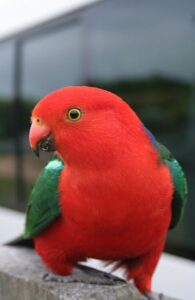 clean shoe covers. He looks professional. He looks at your flooded kitchen, nods calmly, and says, “I’ll have a look.”
Then he glances out your window, gasps, and says, “Oh, would you look at THAT. A crimson rosella. Right there in your camellia. Absolutely magnificent. See the blue cheek patches? That’s a juvenile. Probably hatched in the early spring. You’re very lucky to have him visit.”
[Menu]
You look at the rosella. You look at the water now seeping into your dining room. You look back at Gary. He’s smiling. He’s captivated.
Ninety minutes later, he’s still there. The sink is still leaking. But you now know the complete social hierarchy of the local cockatoo population, the migratory habits of the king-parrot, and the fact that rosellas mate for life and are “very loyal, unlike some plumbers I could mention.”
The question is burning: Can this man—this feathered-fanatic, this bird-brained bard, this ornithological obsessive—actually fix your pipes?
Surprisingly, the evidence suggests… probably yes. Here’s why.
The Focus Factor
You’d think a man distracted by every passing feather would be useless with a wrench. But you’d be wrong.
Gary’s obsession with birds has given him superhuman powers of observation. This man has spent decades standing motionless in national parks, waiting for a single glimpse of a rare parrot. He has the patience of a monk and the eyes of a hawk (again, intended). You think he can’t spot a microscopic crack in your pipe joint? Please. He could spot a loose washer from fifty metres, through binoculars, while identifying a yellow-tailed black-cockatoo by its call.
Good info on Australian Parrots and Birds
When he finally tears himself away from the window, he attacks your plumbing with the laser focus of a kookaburra spotting a sausage. He’s been watching birds long enough to know that timing is everything. He doesn’t rush. He doesn’t fumble. He moves with the deliberate precision of a bowerbird constructing its display. The pipe doesn’t stand a chance.
He’s Dangerously Calm
Other plumbers arrive stressed. They’ve fought traffic over the Spit Bridge. They’ve been yelled at by three other clients. They attack your pipes with the barely-contained rage of a man who’s been on hold with Centrelink for an hour.
Not Gary. Gary has just spent his morning at a local reserve, communing with lorikeets. He is radiating serenity. He could be trapped in a collapsing building and he’d still pause to point out the nesting habits of the rainbow bee-eater.
This calmness is a superpower. While other plumbers would panic at the sight of your water-damaged ceiling, Gary simply says, “Ah, the silver lining. A water feature. Brings the birds in, you know. They love the sound of running water.”
Then he fixes it. Quietly. Peacefully. While humming a tune that suspiciously sounds like a magpie’s warble.
You Get a Free Ornithology Degree
Let’s be honest. By the time Gary leaves, you’ll know more about Australian parrots than you ever thought possible. You’ll know:
-
That sulphur-crested cockatoos can live for eighty years and will absolutely hold a grudge against you if you offend them.
-
That king-parrots are the gentle giants of the parrot world and will eat from your hand if you’re patient.
-
That rosellas have thirteen different subspecies and Gary can identify each one by feather pattern alone.
Is this information useful for your plumbing? No. Not even a little. But you’ll be the most fascinating person at your next dinner party. You’ll casually drop, “Fascinating fact—the crimson rosella’s call varies by region, much like the regional dialects of plumbers in Sydney,” and everyone will nod politely while wondering when you became a National Geographic presenter.
The Bill Will Confuse You
When Gary finally finishes, he hands you an invoice. It’s itemised like this:
-
Pipe replacement (standard): $185
-
Cockatoo observation surcharge (15 minutes): $45
-
Rosella identification consultation: $30
-
King-parrot welfare check (necessary): $25
-
“Bird tax” (don’t ask): $20
You’ll stare at it. You’ll question it. He’ll explain, with complete sincerity, that observing the birdlife is “critical site assessment” because local bird populations indicate the health of the local ecosystem, which affects soil stability, which affects your foundation, which affects your pipes.
It’s nonsense. But you’ll pay it. Because you’re exhausted and because he did, technically, fix the leak.
The Ultimate Test
Here’s how you know Gary is actually a good plumber, despite the bird obsession.
When he’s done, you check the work. The leak is gone. The ceiling is dry. The water pressure is better than it’s been in years. There’s no mess. He used his own towels. He even vacuumed.
And as he packs up his tools, he pauses at your door. He cocks his head. He listens. A wide smile spreads across his face.
“Ah,” he whispers. “That’s a king-parrot. See the red head? Gorgeous. They mate for life, you know.” He turns to you, beaming. “Bit like a good plumber. Once you find one, you keep them.” do king-parrots mate for life?
And you know what? He’s right.
The Verdict
Can a plumber obsessed with cockatoos, rosellas and king-parrots still be good at his job?
Absolutely. In fact, he might be better. Because a man who appreciates the subtle beauty of a crimson rosella is a man who appreciates the subtle beauty of a properly sealed joint. He’s patient. He’s meticulous. He’s passionate about things most people ignore.
Just maybe, next time, ask him to save the bird talk until after the water is turned off.
And for the love of all that’s holy, don’t mention the ibis.
He will not stop.